
By now, six weeks in the quarantine situation, most of us have become well acquainted with a host of video calling apps. Much of my time, anyway, is spent bouncing between Skype, Facetime, Google Hangouts, and everybody’s new favourite: Zoom. What seemed like it would become a lonely and isolated situation has simply turned into a digital event that, for an introvert like me, can feel equally draining as hanging out with people in person.
In fact, when you think about it, many of the face-to-face interactions we had before lockdown were pretty meaningless anyway (think meetings that could have been emails), and making them virtual isn’t such a bad thing. In fact, even now there’s a lot of potential to make our meetings more transformative and valuable for everyone involved, without coming together in person.
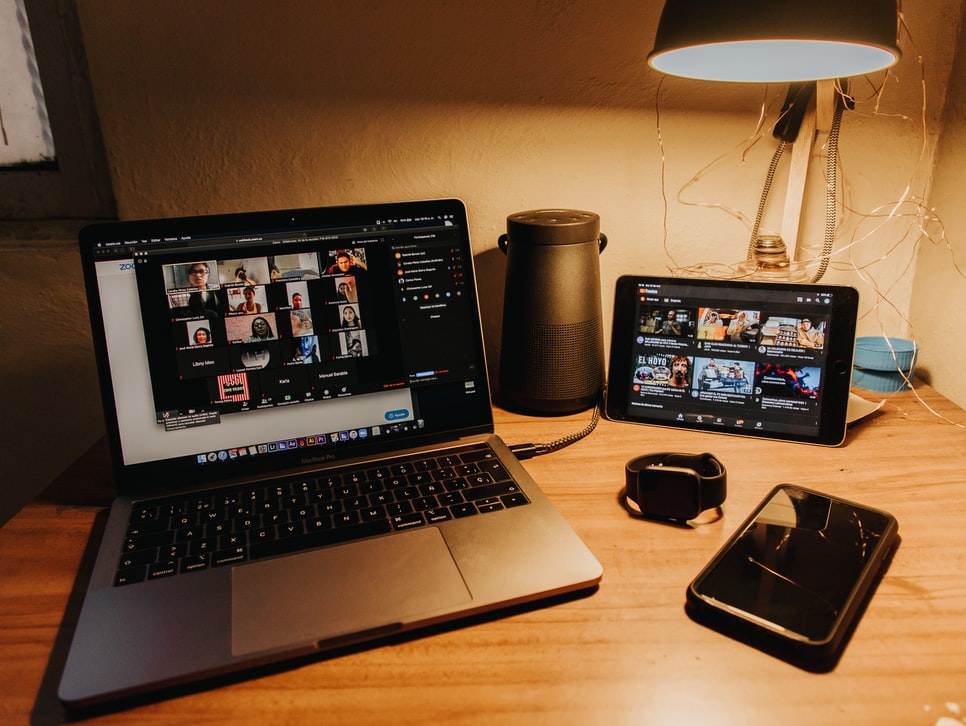
Author of The Art of Gathering: How We Meet and Why it Matters, and host of the podcast Together Apart, Priya Parker, writes that “given the low bar set by our traditional meetings, with people staring at their phones at poorly moderated panels and pointless meetings, it’s possible that these [digital] gatherings, when treated with intention, can outshine your rote in-person get-togethers”. She provides some great guidelines about how to maximise the value of your online work meetings, and recommends making use of everyone’s environments to add context to what may otherwise be a contextless gathering.
“Virtual gatherings suffer, in part, because there’s almost no inherited context to set up ‘the room’,” she writes. “We do very little to counterbalance that. We place our cameras in front of the blandest backgrounds we can.”
Instead, she recommends asking meeting participants to co-create the meeting room by placing their cameras in front of spaces which hold meaning for them. This will add warmth, beauty and colour to the many rectangular windows that everyone else will be looking at during the meeting.
In addition to this, she suggests starting with an opening ritual to get all participants onto the same page. This could be done by showing other participants something in their work space, or by having everyone raise their mug (or wine glass) and tell the others about their beverage of choice. In smaller meetings, you could even include a short office tour, in which people show off their work-from-home (WFH) spaces. It allows all participants the opportunity to feel involved and heard, before business begins.
In a discussion between organisational psychologist Adam Grant and professor of business administration and psychology at the University of Michigan, Jane Dutton, Dutton recommended abandoning the usual “how are you doing” question in order to increase the connection between participants. She explains how, in a meeting of 70 participants, she asked everyone to write one word about how they were feeling in the chat box, and then gave everyone a minute to read through all the replies. “It was a way that we could be present to each other right from the beginning,” she said. “First moments matter anytime we come together”.
Dutton suggested asking questions that can start the meeting off on a positive note, such as “what was the highlight of your day?” or “what are you looking forward to right now?” instead of “how are you?”.
Parker also recommends having a host meeting host who knows how to use the mute button, and can take charge of the situation firmly. “A good host is a deft traffic cop, especially for online gatherings that are clunkier by nature,” she says. “A good host orients her guests to the gathering’s purpose, and connects, protects and equalises her guests”. There’s nothing more frustrating than having people try to talk over each other in a digital room, and not being able to hear anyone as a result. Know who’s in charge, and let them guide the situation.
Of course, we’re not only making use of video meetings for work. Our social lives are taking places in virtual spaces too. Dates, bingo night, and dance parties have all been relocated to digital rooms. It’s understandable then , that perhaps some of us are feeling a bit of Zoom burnout. For this reason, Dutton advises that even in work meetings, we incorporate a sense of play to make calls more interesting.
“Play is a major mechanism for connection”, she says. “Unleashing people’s imaginations and incorporating play — it doesn’t have to be long — could be used to keep people more engaged but also make them more creative and potentially innovative”. Just lightening the mood of the meeting for a few minutes could make a big difference in the attitude of the participants, and increase the potential for connection.
You don’t want to be that weirdo in the business meeting who recommends you all, start playing a game, though, so it’s best to explain your intention from the get go. Dutton emphasises that with all connecting practices, people are more receptive to them if you explain why they’re being done.
“Explain that this is about trying to build better connective tissue so that our group will be better and more capable. When people understand that it’s in service of those kinds of things, they let their guard down and participate more fully.”
It’s likely that even after our quarantine period ends, many of our interactions will remain in the digital realm. This is, as a result, a kind of practice round for what things will be like going forward.
This is a new experience for many of us, and experimenting with what works and what doesn’t is important. When working from home, it’s not always possible to separate our work lives from our private lives (think of the BBC reporter whose kids barged into the room while he was working), nor should we be overly concerned when the two do overlap.
Situations like this are likely to happen. Perhaps everyone in your virtual office will catch a glimpse of your laundry drying in the background, or the dirty dishes in your kitchen sink, but these are just reminders that you too are a human being with a life, and perhaps a pet who wants to say hi while you’re working. These very human interruptions may even be an opportunity to increase closeness between you and your colleagues.
We have no choice but to embrace these digital spaces as the new normal, so let’s go out there (without going anywhere) and turn them into meaningful and connective spaces that, hopefully soon, will be less strange and exhausting and a little more “normal”.
If you like our content and would like to support our independent media publication, please consider contributing towards our Patreon account
